



Latest News from the World of Breathalyzers
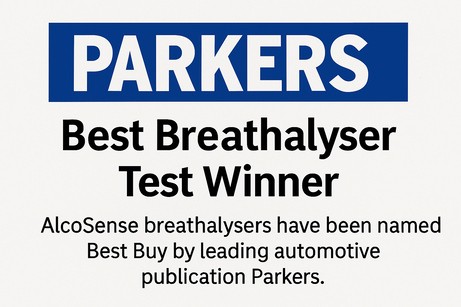
AlcoSense Triumphs in Parkers' 2025 Breathalyser Test
AlcoSense has once again proven its commitment to road safety and product excellence, securing top honours in Parkers' prestigious 2025 breathalyser test. With the UK poised to lower its drink-drive limit next year from 35 to 22 micrograms of alcohol per 100ml of breath (0.35 to 0.22 mg/L), accurate and reliable breathalysers are more essential than ever.
In a comprehensive review of the best breathalysers available in the UK, Parkers named the AlcoSense Pro Fuel Cell Breathalyser as its Editor’s Pick, praising its exceptional accuracy, advanced features, and user-friendly design. The Pro model impressed testers with its BlowCoach technology, temperature sensor, and country-specific configuration, making it the ideal tool for ensuring safe driving the morning after.
Also recognised were the AlcoSense Lite 2 and AlcoSense Excel, which earned accolades for their compact design, affordability, and professional-grade fuel cell sensors. These models offer peace of mind for casual and frequent users alike, reinforcing AlcoSense’s reputation for quality across its range.
Hunter Abbott, Managing Director of AlcoSense, commented:
"We’re proud to see our products recognised by Parkers. With the upcoming changes to UK drink-drive laws, it’s more important than ever for drivers to have access to accurate, easy-to-use breathalysers. Our mission is to help people make informed decisions and stay safe on the roads."
As the UK prepares for stricter limits, AlcoSense continues to lead the way in personal breathalyser technology—offering drivers the tools they need to stay safe, legal, and responsible.
Best-in-Test: AlcoSense breathalysers—trusted by experts, chosen by drivers.
Link to article: https://www.parkers.co.uk/car-advice/lifestyle-lei...

******
If you wish to use the infographic, please email press (at) alcosense.co.uk for a high resolution version.
Any use must credit AlcoSense Breathalysers and not be modified in any way.
*******
Labour’s Proposed Drink-Drive Limit Reduction in England & Wales – Your Questions Answered
The Labour government has announced plans to reduce the legal drink-drive limit in England and Wales. This move is part of a broader road safety strategy aimed at reducing fatalities and serious injuries on UK roads. Here’s everything you need to know.
What is the current drink-drive limit in England?
Currently, the legal alcohol limit for drivers in England and Wales is:
- BREATH: 35 micrograms of alcohol per 100 millilitres of breath (0.35 mg/L), or
- BLOOD: 80 milligrams per 100 millilitres of blood (0.80 ‰BAC)
This is the highest in Europe by some margin, and equal highest in the developed World! Many European countries operate a limit of 9 micrograms of alcohol per 100 millilitres of breath which is generally accepted as best practice.
For comparison, Scotland and Ireland both operate the following limit:
- BREATH: 22 micrograms per 100 millilitres of breath (0.22 mg/L), or
- BLOOD: 50 milligrams per 100 millilitres of blood (0.50 ‰BAC)
What is the Labour government proposing?
Labour plans to reduce the drink-drive limit in England and Wales to match Scotland’s lower threshold:
- From 35 micrograms per 100 millilitres of breath (0.35 mg/L)
- To 22 micrograms per 100 millilitres of breath (0.22 mg/L)
This change would bring England and Wales in line with the highest limit currently in place in the rest of Europe and is expected to be part of a new road safety strategy due in autumn 2025.
Why is this change being proposed?
The proposal is backed by research showing that even small amounts of alcohol significantly increase crash risk. A key study supporting this is:
“Drugs and Alcohol: Their Relative Crash Risk” by Romano, Torres-Saavedra, Voas, and Lacey (2014)
The study found:
- Drivers with a Breath Alcohol Concentration (BrAC) of 22 micrograms per 100 millilitres of breath (equivalent to the proposed new limit) are six times less likely to be involved in a fatal crash than those at the current legal limit of 35 micrograms per 100 millilitres of breath.
- Alcohol is a more significant contributor to crash risk than many other substances.
- Interestingly, if the limit was reduced to 9 micrograms per 100 millilitres of breath this would reduce the likelihood of being in a fatal crash by around 13 times.
By lowering the legal limit to 22 micrograms in breath, England could see a substantial reduction in alcohol-related fatalities, particularly among drivers who currently fall within the 22-35 microgram range, where alcohol has significantly measurable effects on the driver and they are effectively "legal but lethal".
What steps are needed for this proposal to become law?
Here’s a likely timeline and process:
- Strategy Publication – Autumn 2025
Labour will publish its road safety strategy, including the proposed limit change. - Public Consultation – Late 2025 to Early 2026
Stakeholders such as motoring groups, police, and the public will be invited to give feedback. - Drafting Legislation – Early to Mid 2026
Based on consultation outcomes, a bill will be drafted and introduced to Parliament. - Parliamentary Process – Mid to Late 2026
The bill must pass through both Houses, including readings, committee stages, and amendments. - Royal Assent and Implementation – Early 2027
Once approved, the bill becomes law and enforcement begins.
What impact could this have on road safety?
Lowering the limit is expected to:
- Reduce alcohol-related crashes and fatalities
- Encourage more cautious behaviour among drivers
- Align England and Wales with the highest limits in place in Europe.
- Remove drivers who are "legal but lethal" between 22 and 35 micrograms per 100 millilitres of breath
Conclusion
Labour’s proposal to reduce the drink-drive limit is a data-driven, safety-focused initiative that could save lives and bring England in line with international standards. Backed by research and public concern over rising drink-driving fatalities, the move signals a renewed commitment to road safety and responsible driving.
Final Thoughts
England remains an outlier with the highest legal drink-drive limit in the developed world. This means we have drivers who are legal but lethal on our roads. The evidence is clear: even modest reductions in blood alcohol concentration significantly lower crash risk. Bringing our limit closer to a level where intoxication is meaningfully reduced should be a no-brainer; a simple, effective step toward saving lives and modernising our road safety standards.
Author: Hunter Abbott, AlcoSense Laboratories
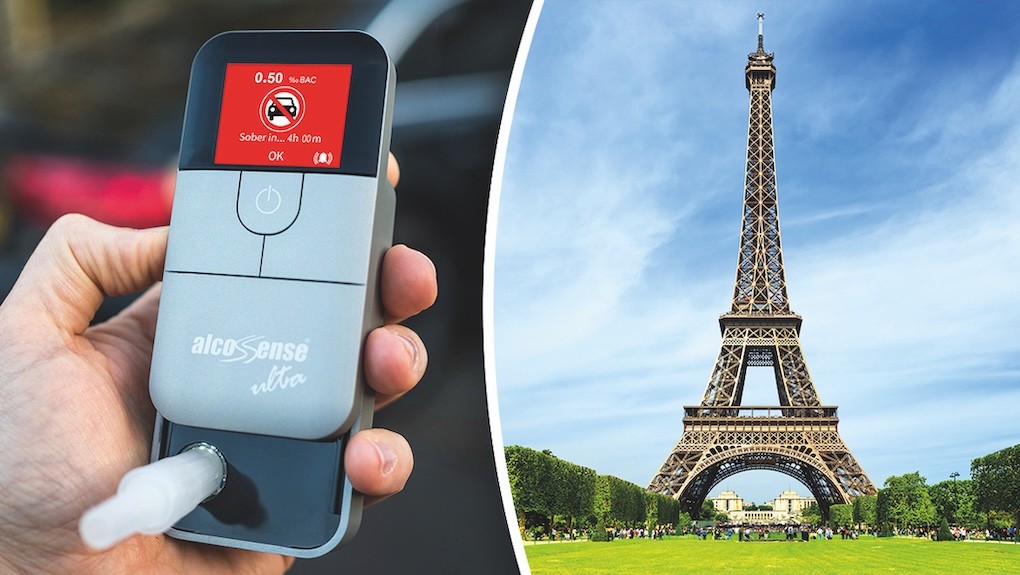
UK motorists heading to Europe this summer are being urged to brush up on local motoring laws – or risk steep fines and even jail time.
With Spain and France topping the destination list for British tourists, drivers may be caught out by far tougher legal limits and stricter enforcement.
Spain is set to reduce its drink drive limit this year to just 20µg of alcohol per 100ml of blood (0.20‰ BAC / 0.10 mg/L in Breath) – one quarter of the English and Welsh limit of 80µg (0.35 mg/L in Breath) – meaning even a single drink could tip drivers over the line. The change will bring Spain in line with countries like Sweden, Poland and Norway.
“In Spain, if you’re over the limit, you could be fined €1,000 or more,” says Hunter Abbott, Managing Director of personal breathalyser firm AlcoSense. “The safest approach is to avoid alcohol entirely before driving – or if in any doubt, self-test to check you're safe to drive, especially the morning after drinking.”
The warning comes as a Freedom of Information Request by AlcoSense reveals that Spanish authorities have submitted more than 37,000 requests to the UK’s DVLA since March 2023 to access British driver details – including 7,000 already this year. The requests are part of a bilateral agreement allowing Spain to pursue UK motorists for offences like speeding, red light violations and drink driving - even once they’ve returned home.
Meanwhile, French authorities have continued to send tens of thousands of motoring fines to UK homes, despite no formal post-Brexit data-sharing agreement. A French government report has revealed that 62,780 fines were issued to UK-registered vehicles in 2023, up from 59,836 the previous year – even though the UK is no longer listed as a data-sharing ‘partner’.
How this is happening remains unclear, but enforcement is ramping up. France has dramatically stepped-up roadside testing after a rise in fatal accidents linked to alcohol or drugs. French police are 20 times more likely to breathalyse drivers than their UK counterparts. They test 109 drivers per 1,000 people, compared to just 5 per 1,000 in Britain. In Spain the figure is 96 per 1,000.
The drink drive limit in England and Wales is higher than all other countries in Europe.
France, Germany, Italy and Portugal all impose a limit of 0.50‰ and novice drivers often face even stricter thresholds.
“The penalties abroad can be severe. In France you could face a €4,500 fine and up to two years in prison,” warns Abbott.
“Many drivers don’t realise that alcohol can stay in the system for hours after drinking – four large glasses of wine can take up to 14 hours to fully clear.”
Abbott recommends motorists take a twin-pack of certified single-use breathalysers when heading across the Channel to remove uncertainty. In France, it’s still advised (though no longer legally required) to carry a certified breathalyser in your vehicle.
“Whether you’re hiring a car abroad or driving your own, you’re subject to the local laws,” he adds.
“Random breath testing is carried out in all EU countries except Germany - whereas in the UK you can only be tested if you’ve committed a traffic offence, been involved in an accident or Police have reason to suspect you’ve been drinking.
“This makes it far more likely that you’ll be breathalysed abroad”.
-ends-
11 August 2025
» read more