



Latest News from the World of Breathalyzers
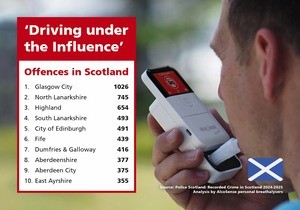
A total of 4,427 Scottish motorists were taken to court last year for ‘driving under the influence’ (DUI) according to figures published in today’s Criminal Proceedings in Scotland report.
Although this represents a decrease on the previous year, prosecutions are still up 15% compared with a decade ago - highlighting a persistent core of motorists who continue to risk lives by driving after consuming alcohol.
The number of drivers convicted was 4,260 - giving Scotland a 96% conviction rate for DUI offences.
The figures are released as Police Scotland gets underway with its annual Christmas and Hogmanay drink and drug drive campaign, which runs until 2 January 2026. Drivers can expect an increase in roadside breath testing, with targeted patrols in known drink-drive hotspots such as Glasgow, North Lanarkshire, the Highlands, South Lanarkshire and Edinburgh.
Last Christmas, officers carried out 4,779 breath tests and 963 roadside drug wipes, resulting in over 1,300 offences detected - the highest activity levels seen in recent years.
In 2023, ten people were killed by a drink driver and 300 were injured, according to Transport Scotland. While a reduction on the previous year, the toll remains “unacceptably high”, says Hunter Abbott, Managing Director of personal breathalyser firm AlcoSense.
“It only takes one impaired driver to devastate families,” comments Abbott. “With Scotland’s lower drink drive limit, even small amounts of alcohol can put you over the legal threshold.”
“The only reliable way to know you’re safe and legal to drive is to self-test with a personal breathalyser. Particularly the morning after a night out, when alcohol can remain in your system for many hours.”
Abbott warns that December is the highest-risk month for both collisions and enforcement.
“Police Scotland ramp up roadside checks over Christmas and Hogmanay. If you’ve been drinking, your chances of being breathalysed are significantly higher than at other times of year.”
- ends –
9 December 2025
Sources:
Scottish Government: Criminal Proceedings in Scotland 2023–2024
Transport Scotland: Reported Road Casualties Scotland 2024
Police Scotland Festive Drink & Drug Driving Campaign Statistics
Drink-Drive Limit Reduction “Overdue but Welcome”
The government’s long-awaited proposal to lower the drink-drive limit in England and Wales is a welcome and overdue move, according to Hunter Abbott, Managing Director of AlcoSense Laboratories and member of the Parliamentary Advisory Council for Transport Safety (PACTS).
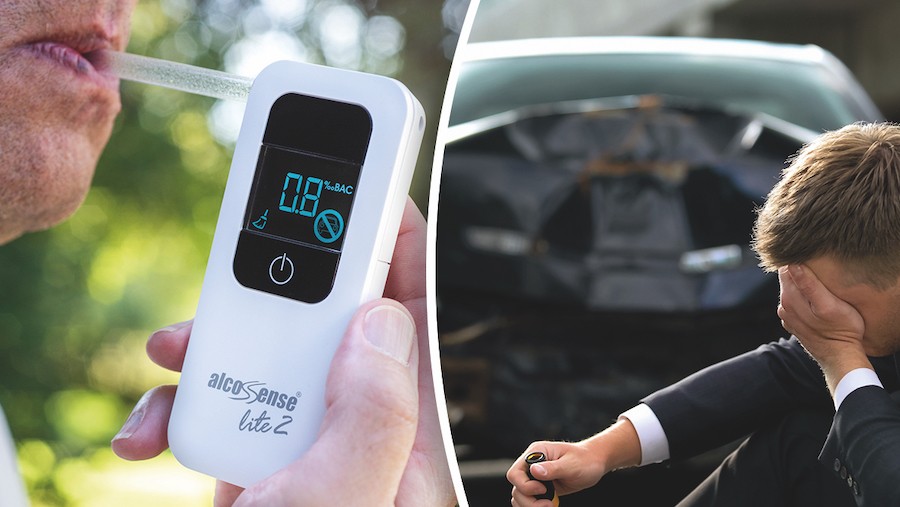
Labour plans to reduce the legal limit from 80mg of alcohol per 100ml of blood (0.80‰ BAC) to 50mg (0.50‰ BAC), bringing England and Wales into line with Scotland and much of Europe.
Writing on Road Safety GB Abbott says campaigners have warned for years that the English and Welsh limit is dangerously out of step with modern science and international best practice.
“At 80mg, a driver is around 13 times more likely to be involved in a fatal crash than someone sober. These are the ‘legal but lethal’ drivers we share our roads with,” he explained.
Even at the proposed new limit, drivers are still five times more likely to be involved in a fatal crash than when sober. Abbott argues that England and Wales should ultimately aim for a 20mg limit, as adopted by countries such as Sweden, Norway, Poland and - imminently - Spain.
“A 20mg threshold strikes the right balance,” he says. “It is below the point of intoxication, prevents impairment, and aligns with international best practice.”
Opponents often point to Scotland, claiming that its 2014 change had no measurable impact on casualties. But a 2024 AlcoSense survey, marking the tenth anniversary of the law, found that 79% of Scots believe it has made roads safer, 77% want England and Wales to follow suit and 40% report drinking less overall.
“The data shows that lowering the limit reshapes behaviour,” Abbott explains. “Fewer people drink when they know they will drive, and millions avoid risky decisions altogether.”
The latest government figures underline the urgency of reform. In 2023, 260 people were killed in drink-drive crashes, with 6,310 casualties in total. Progress has stalled: fatalities have hovered above 200 for nearly a decade.
Abbott insists the limit change must be paired with further measures, including more post-crash testing (currently just 37% of drivers are breathalysed, down from 51% a decade ago), random roadside checks (standard across Europe, but not in the UK) and stronger public education.
“At AlcoSense, we focus on helping people make safe decisions the ‘morning after’, when alcohol can remain in the system long after drinking. Our mission is to prevent dangerous guesswork, not to help people drink up to a limit,” adds Abbott.
“The UK once led the way on road safety with the first roadside breath test in 1967. We are now lagging behind. In 2025, there is no excuse for laws that allow impaired drivers on our roads. Reducing the limit will save lives - and that, surely, is reason enough.”
» read more